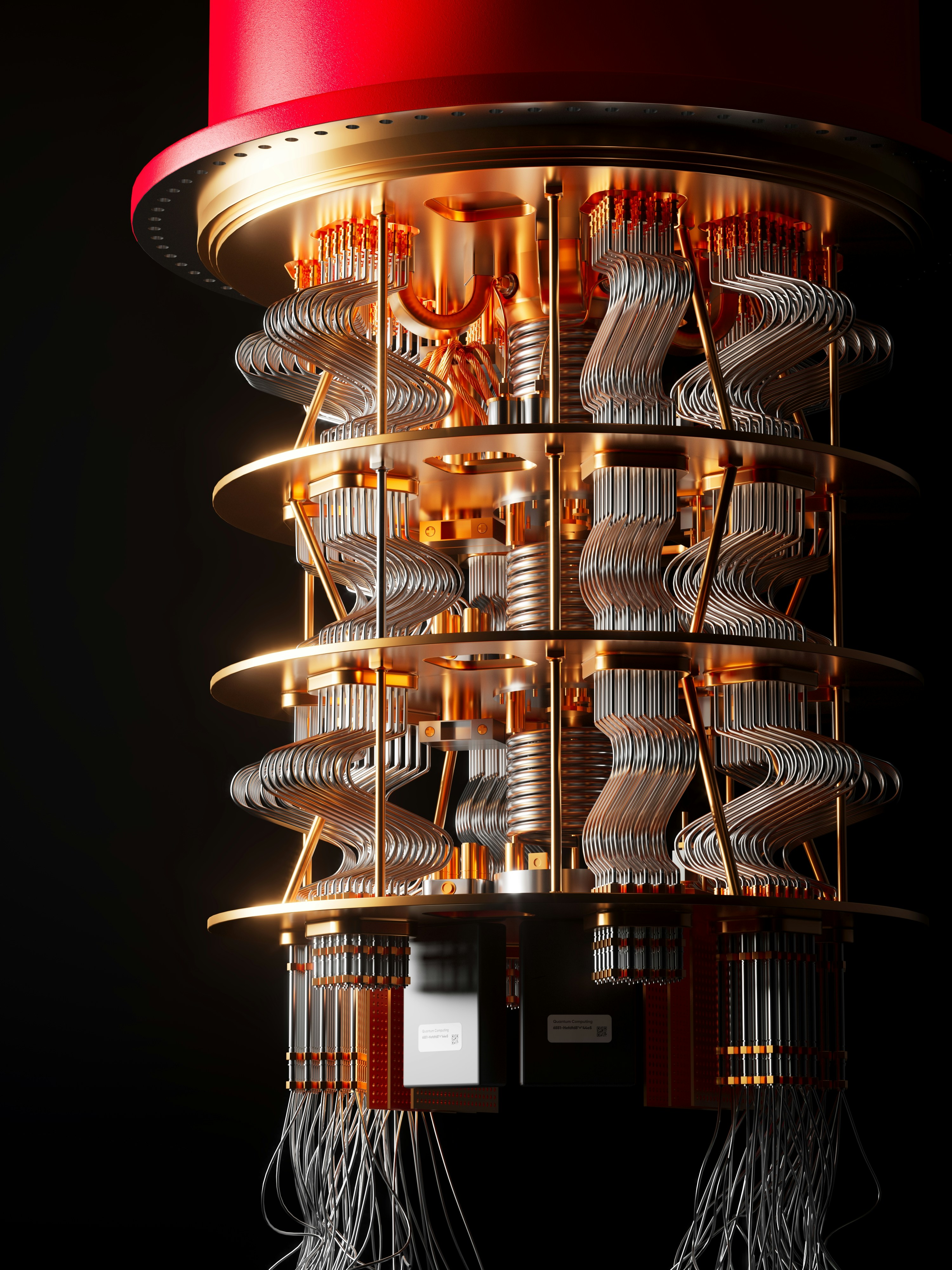
Unveiling Willow: Google’s Quantum Chip That Could Change Everything
Imagine a computer that can solve problems in seconds that would take today’s most powerful machines millions of years. Google’s latest quantum chip, Willow, brings us one step closer to that reality. Quantum computing is no longer a futuristic concept; it’s becoming tangible, with the potential to transform industries, scientific research, and even daily life. In this blog, we’ll explore what quantum computing is, why Willow is a game-changer, and how it could revolutionize the way we approach complex problems—all in simple, easy-to-understand terms.
Understanding Quantum Computing
Quantum computing is fundamentally different from the computers we use every day. While classical computers operate using bits, which are either 0 or 1, quantum computers utilize quantum bits, or qubits, which can exist in multiple states simultaneously. This property allows quantum systems to process enormous amounts of information at once, unlocking computational possibilities that are impossible for classical machines.
Superposition: More Than Just 0s and 1s
Think of a coin spinning in the air. While spinning, it’s not just heads or tails—it’s in a combination of both. Qubits behave similarly thanks to superposition. This allows quantum computers to explore multiple possibilities at the same time. For example, a quantum computer with 300 qubits could theoretically represent more states simultaneously than there are atoms in the observable universe!
Entanglement: Instant Connections Across Space
Now imagine two dice linked by magic. Roll one, and the other instantly shows the matching outcome, no matter the distance. This is entanglement, a phenomenon where the state of one qubit is intrinsically connected to another. Entanglement enables coordinated calculations that exponentially increase computational power, allowing quantum systems to solve complex problems that classical computers struggle with.
Why Quantum Computing Matters
- Faster Problem Solving: Quantum computers can process huge datasets in parallel, drastically reducing computation times for certain problems.
- Advanced Simulations: Simulate molecules, materials, and complex systems more accurately than classical computers.
- Optimization: Quantum algorithms can find the most efficient solutions for logistics, finance, and resource management.
- Cryptography: Can potentially break traditional encryption but also enable new, quantum-safe methods of secure communication.
By harnessing superposition and entanglement, quantum computers like Willow promise to transform industries ranging from healthcare to finance, energy, and artificial intelligence.
Introducing Google’s Willow
Google has been at the forefront of quantum research for years, and Willow represents the company’s latest leap in this domain. Willow is a next-generation quantum chip designed to address challenges that have limited previous quantum systems. It combines advanced hardware design, improved error correction, and energy efficiency, making it one of the most promising quantum chips to date.
Superconducting Qubits
Willow uses superconducting qubits, which allow electrons to flow without resistance, reducing energy loss and maintaining the stability of qubits for longer durations. This is crucial because qubits are fragile and can easily lose their quantum state—a phenomenon known as decoherence. By minimizing energy dissipation, Willow can maintain reliable computations over extended periods.
Fault-Tolerant Design
Errors are a natural part of quantum computing, caused by environmental interference and qubit instability. Willow addresses this challenge through advanced error correction techniques, making it fault-tolerant. This allows researchers to run complex algorithms without worrying about significant computation errors.
Energy Efficiency and Sustainability
Quantum processors typically require significant energy, both for operation and for maintaining ultra-cold conditions. Willow incorporates innovative thermal management, reducing its energy footprint while maintaining performance. This makes it suitable for scaling to larger quantum networks sustainably.
Enhanced Connectivity
Willow’s qubits are designed to communicate more efficiently. Improved connectivity allows the chip to execute complex, multi-qubit operations that were previously difficult or impossible, paving the way for large-scale quantum computations in the near future.
📌 Read the official Google blog on Willow
What Willow Can Do
Willow’s potential applications span multiple industries, with profound implications:
Drug Discovery
- Quantum simulations can model molecular interactions accurately, identifying promising drug candidates faster.
- Reduces time and cost for developing new medicines.
- Enables personalized medicine by simulating individual responses to drugs.
Optimization and Logistics
- Helps companies optimize supply chains, inventory, and delivery routes.
- Processes multiple variables simultaneously, finding optimal solutions quickly.
- Could revolutionize logistics, transportation, and manufacturing efficiency.
Material Science
- Predicts behaviors of new materials at atomic levels, useful for batteries, semiconductors, and alloys.
- Supports innovations in energy storage, construction materials, and electronics.
- Enables development of next-generation technologies like quantum sensors and nanotech devices.
Cybersecurity
- Traditional encryption may be vulnerable to quantum attacks.
- Willow can help develop quantum-safe encryption protocols to secure sensitive data.
- Supports future-proof cybersecurity strategies for governments and corporations.
Willow vs Other Quantum Chips
Google’s Willow chip stands out in the competitive quantum landscape. Here’s a comparison with major players:
| Chip | Qubits | Strengths | Limitations |
|---|---|---|---|
| IBM Eagle | 127 | First to exceed 100 qubits, cloud-ready | Shorter coherence time, higher error rates |
| Rigetti Aspen | Variable | Cloud integration, flexible architecture | Higher error rates, less stable |
| Google Willow | Advanced superconducting qubits | Long coherence, low errors, modular design | Still early for large-scale commercial use |
Willow’s modular and fault-tolerant design ensures scalability and reliability, making it ideal for complex computational tasks that competitors struggle with.
Why Willow Matters for Industries
Willow’s impact extends across numerous sectors:
Healthcare and Pharmaceuticals
- Accelerates drug discovery and personalized medicine.
- Models complex biological systems, reducing costly experiments.
- Supports development of novel therapies for complex diseases.
Finance
- Optimizes investment portfolios and risk management strategies.
- Analyzes large datasets faster than classical systems.
- Helps design advanced predictive algorithms for stock markets.
Energy
- Improves renewable energy grid management.
- Optimizes energy distribution and storage.
- Simulates complex chemical reactions for better battery technology.
Artificial Intelligence
- Enhances AI models by processing huge datasets efficiently.
- Accelerates machine learning training times.
- Enables development of smarter, more adaptive algorithms.
Cybersecurity
- Develops quantum-safe encryption protocols.
- Protects sensitive government and corporate data.
- Prepares for a future where quantum attacks are possible.
Challenges in Quantum Computing
- Scalability: More qubits increase error probability, making large-scale quantum systems difficult.
- Error Correction: Quantum states are fragile; real-time error correction is complex and resource-intensive.
- Algorithm Optimization: Software must be redesigned to take full advantage of quantum hardware.
- Infrastructure & Cost: Requires specialized facilities and cooling systems.
Public Understanding and Accessibility
Quantum computing can be overwhelming for the general public. Google is working to make it approachable:
- Cloud-based platforms allow researchers and businesses to experiment without massive infrastructure.
- Educational initiatives, tutorials, and webinars demystify quantum concepts.
- Accessible quantum computing encourages startups and researchers to innovate.
The Future of Google and Quantum Computing
- Willow strengthens Google’s leadership in quantum R&D.
- Collaborations with universities and tech companies can accelerate breakthroughs.
- Other tech companies will compete, driving rapid innovation.
- Integration into Google Cloud could make quantum computing accessible globally.
- Potential for transformative applications in AI, medicine, finance, energy, and cybersecurity.
Conclusion: Embracing the Quantum Future
Google’s Willow chip is more than just a technological innovation—it’s a paradigm shift. Its potential spans multiple industries, transforming healthcare, cybersecurity, AI, and energy. Willow represents the next step toward a quantum-powered future, where scientific and technological limits are redefined, and problems once thought unsolvable can now be tackled with unprecedented efficiency.
As quantum computing evolves, staying informed and exploring new applications will be critical. Willow is not just a chip; it’s a doorway to a future where computation, innovation, and discovery operate on a completely new level.